Charlotte Agent Commission Rates vs. National Averages
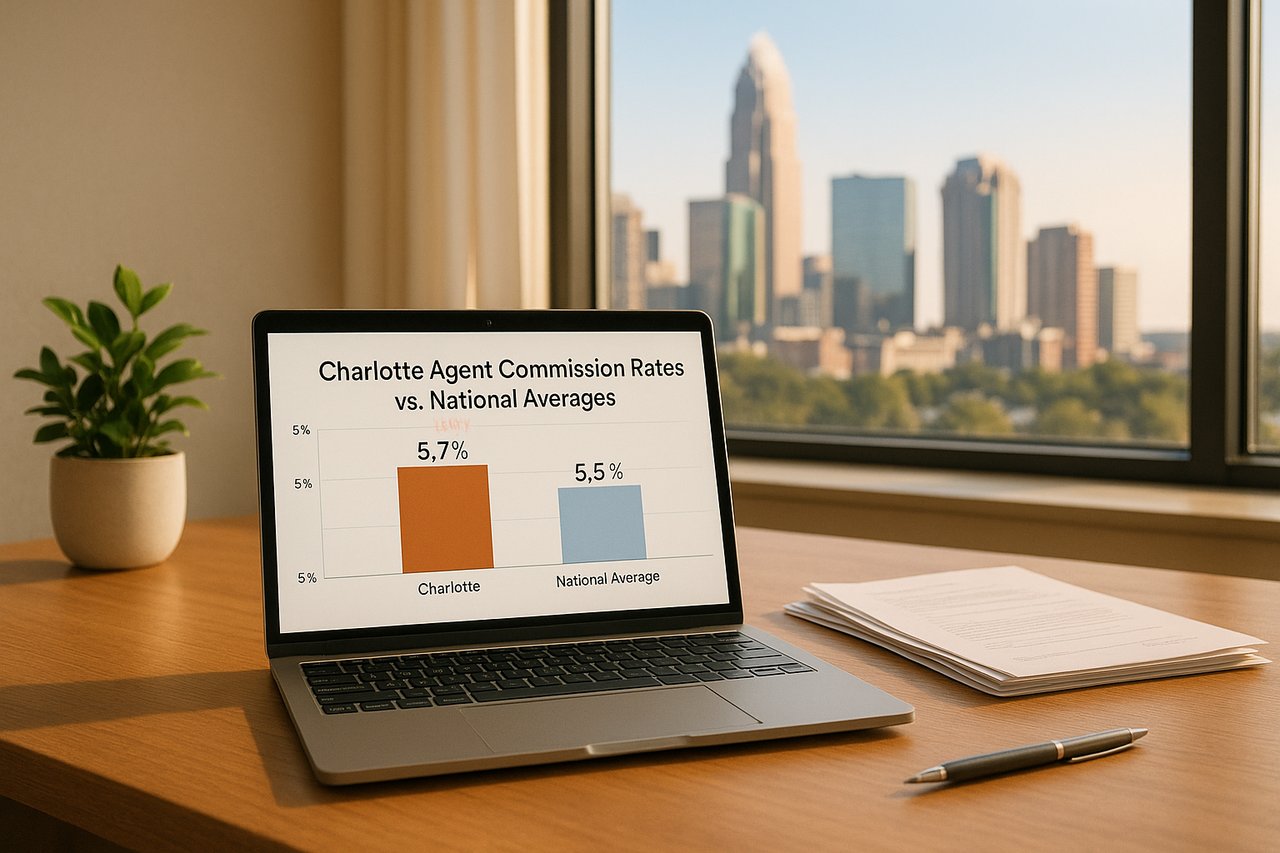
Charlotte’s real estate commission rates are slightly below the national average, offering potential savings for sellers. The average total commission in Charlotte is 5.32%, compared to the U.S. average of 5.44%. For a median-priced home in Charlotte ($405,000), this translates to a total commission of $21,546, with 2.83% going to the listing agent and 2.49% to the buyer’s agent. Nationally, listing agents average 2.77%, while buyer’s agents average 2.67%.
Key points:
-
Charlotte’s rate (5.32%) is lower than both the North Carolina average (5.46%) and the national average (5.44%).
-
Sellers in Charlotte save up to $1,008 on higher-priced homes compared to national rates.
-
Commission rates are negotiated upfront, with the seller typically covering both agents’ fees.
-
Market trends, like Charlotte’s rising home prices (+5.9% YoY) and competitive housing inventory, influence rates.
Understanding these rates, along with local market conditions, helps buyers and sellers make informed decisions.
Charlotte, NC Commission Rates
Charlotte's real estate market offers commission rates shaped by local trends and industry norms. Knowing these rates is essential for both buyers and sellers to navigate transactions effectively.
Average Commission Rates in Charlotte
In Charlotte, real estate agents generally charge a total commission of about 5.32%, which is slightly below the averages for North Carolina (5.46%) and the U.S. as a whole (5.44%).
Typically, listing agents in Charlotte receive around 2.83%, while 2.49% goes to the buyer's agent. According to John Combs, a local Realtor, the recent NAR settlement is unlikely to have a major impact on these percentages, saying it won’t affect rates "much at all".
Though commission splits can vary depending on brokerage policies, it’s common for agents in Charlotte to divide commissions equally between the listing agent and the buyer's agent.
Commission Costs for Charlotte Home Prices
The percentage-based commission structure directly influences the dollar amounts sellers pay, especially as home prices rise. For example, the median home price in Charlotte reached $405,000 in January 2025, marking a 5.9% increase from the previous year. This rise in home values significantly affects commission costs.
Here’s a breakdown based on the average commission rate of 5.32%:
|
Home Sale Price |
Total Commission (5.32%) |
Listing Agent (2.83%) |
Buyer's Agent (2.49%) |
|---|---|---|---|
|
$405,000 |
$21,546 |
$11,462 |
$10,085 |
|
$427,000 |
$22,716 |
$12,084 |
$10,632 |
|
$350,000 |
$18,620 |
$9,905 |
$8,715 |
For a median-priced home in Charlotte, sellers can expect to pay around $21,546 in total commissions. As of January 2025, home values have risen by 5.2% compared to the previous year, while the average time on the market increased from 54 days in January 2024 to 64 days in January 2025.
How Commission Payments Work in Charlotte
In Charlotte, sellers are generally responsible for covering both the listing and buyer's agent commissions, which typically range between 5-6% of the sale price. Following the 2024 NAR settlement, sellers and buyers now negotiate commission rates with their respective agents separately.
Andy Harrell of Carolina Living Associates advises sellers to offer buyer's agents "2.5-3% to remain competitive in most markets". For listing agents, a commission in the 2.5-3% range remains standard, though rates can fluctuate depending on the property, local competition, and the level of service required.
With homes in Charlotte averaging about 64 days on the market, agents may adjust their rates to reflect the effort needed to close a deal. Additionally, agents often share part of their commission with their brokerage.
National Average Commission Rates
Understanding national commission rates helps provide a clearer picture of Charlotte's market by highlighting broader trends and regional differences that shape why rates vary across the country.
US National Commission Rate Overview
As of 2025, the average real estate commission rate in the US is 5.44%. On average, this is split into 2.77% for listing agents and 2.67% for buyer's agents.
For a home priced at $368,000, sellers typically pay around $20,018 in commission fees. Since commissions are percentage-based, the actual dollar amount varies depending on property values, creating noticeable differences between markets.
One noteworthy trend is the decline in buyer's agent commission rates. These rates have dropped from approximately 3% in the late 1990s to around 2.7% today. The 2024 NAR settlement played a key role in accelerating this decline, with significant reductions in buyer's agent commissions between 2023 and 2024.
According to data from AccountTECH, buyer's agent commissions averaged 2.55% in mid-January 2025, which is consistent with the previous year. Meanwhile, listing agent commissions saw a slight increase, averaging 2.73%, compared to 2.72% a year earlier. This data suggests that after initial shifts following the NAR settlement, commission rates have largely leveled out. These national figures provide a baseline for understanding how regional rates differ.
Regional Differences Across the US
While national averages are useful, regional variations paint a more detailed picture, with local market conditions, agent competition, and property values all influencing commission rates.
For example, Michigan has the highest average commission rate in the country at 6.03%, while New Jersey reports the lowest at 4.92%. This 1.11% difference can mean thousands of dollars in either savings or extra costs for homeowners, depending on where they live.
Here’s a breakdown of regional averages:
-
Midwest: 5.67% (highest regional average)
-
Northeast: 5.57%
-
Southwest: 5.57%
-
West: 5.48%
-
Southeast: 5.42% (lowest regional average)
States with high property values, like California (5.18%) and Hawaii (5.22%), tend to have lower commission percentages. This is because agents in these areas can still earn substantial income even with lower rates due to higher home prices. On the flip side, states with lower housing costs, such as Wyoming (5.67%) and Idaho (5.67%), often maintain higher percentage rates.
Regions like the Northeast and Pacific Northwest, known for their expensive housing markets, also show lower average rates. This trend reflects an inverse relationship: agents in high-cost areas can charge lower percentages while still earning competitive commissions.
Local dynamics further shape commission rates. In markets with intense agent competition, rates are often more negotiable. However, in areas with fewer agents, commission standards tend to be higher. Following the 2024 NAR settlement, 54% of agents reported an increase in buyers and sellers negotiating commissions, reflecting a shift toward greater flexibility in pricing.
In 2024, total commissions and related costs across the US reached approximately $170 billion, accounting for about 0.6% of the nation’s GDP. This underscores the economic significance of real estate transactions and highlights the importance of examining Charlotte's rates within this larger national framework.
Charlotte vs National: Rate Comparison
Side-by-Side Rate and Cost Comparison
When you compare Charlotte's real estate commission rates to the national average, the difference might seem small at first glance. However, these differences add up, especially for higher-priced homes. Charlotte's total commission rate sits at 5.32%, slightly below the national average of 5.44%, which can mean savings of up to $1,008 on expensive properties.
|
Market |
Total Commission |
Listing Agent |
Buyer's Agent |
|---|---|---|---|
|
Charlotte |
5.32% |
2.83% |
2.49% |
|
North Carolina |
5.46% |
Not specified |
Not specified |
|
National Average |
5.44% |
2.77% |
2.67% |
To better understand the impact, let’s break it down into dollar amounts based on different home prices:
|
Home Price |
Charlotte Commission (5.32%) |
National Commission (5.44%) |
Difference |
|---|---|---|---|
|
$250,000 |
$13,300 |
$13,600 |
$300 savings |
|
$399,000 |
$21,227 |
$21,706 |
$479 savings |
|
$510,000 |
$27,132 |
$27,744 |
$612 savings |
|
$840,000 |
$44,688 |
$45,696 |
$1,008 savings |
Even a small percentage difference like this can lead to noticeable savings for sellers, particularly in a competitive market like Charlotte.
Implications of Rate Differences
Charlotte's slightly lower commission rates reflect the competitive nature of its local real estate market. Sellers in Charlotte benefit the most from reduced buyer's agent commissions, which are 2.49%, compared to the national average of 2.67%. This smaller percentage directly translates into lower overall selling costs for homeowners.
John Combs, a Charlotte Realtor, notes:
"The NAR settlement won't affect rates 'much at all.'"
Charlotte's unique market conditions contribute to these lower rates. As a growing financial and tech hub with a steady influx of new residents, the city has a strong housing market. With a median home price of $399,000 as of Q1 2025 and homes selling at an average of $219 per square foot, the demand remains high. Additionally, homes spend an average of 26 days on the market, and 42% of properties sell above the asking price, underscoring the strength of the seller's market.
Despite this robust demand, Charlotte's commission rates remain below the national average. This is likely due to healthy competition among agents, which helps keep costs manageable for sellers. For instance, a seller listing a median-priced home in Charlotte saves about $479 compared to national rates. On higher-priced homes, like those selling for $840,000, the savings grow to over $1,000.
These cost advantages highlight the benefits of working with experienced local agents, who can navigate the market dynamics while ensuring sellers keep more of their earnings. Up next, we’ll dive into how to find the right agent to maximize these savings.
What Affects Commission Rates in Charlotte
Market Conditions and Agent Competition
In Charlotte, real estate commission rates - currently averaging 5.32% - are shaped by several market factors that influence how agents set their fees.
One major factor is housing inventory. As of January 2025, Charlotte had just 1.56 months of housing inventory, which firmly places it in a seller's market. Low inventory means more competition among buyers, giving agents greater leverage when negotiating their rates.
Another key element is the sale-to-list price ratio. Homes in Charlotte are selling at 89.32% of their list price as of January 2025. This ratio plays a role in how agents position their services and account for potential price negotiations.
Home value trends also weigh heavily on commission rates. Over the past year, Charlotte experienced a 5.39% rise in home values, with the median home price climbing to $405,000 in January 2025 - up 5.9% from the previous year. Higher home prices naturally result in larger commissions, even at the same percentage, which can make agents more willing to negotiate their rates.
On top of these factors, agent competition is fierce. Charlotte’s growing population and thriving job market attract both buyers and real estate professionals, making it essential for agents to strike a balance between competitive pricing and high-quality service.
With 2,252 homes on the market and an average listing duration of 64 days as of January 2025, agents must factor in how quickly homes sell when determining their fees. These dynamics set the tone for how agents tailor their services and negotiate their rates.
Negotiation and Service Quality
Beyond market conditions, commission rates are further shaped by negotiation and the quality of services agents provide. Many agents are open to adjusting their fees based on the unique needs of their clients and the value of their services. In a seller’s market like Charlotte, where homes sell more quickly, agents may be more inclined to lower their rates since properties often require less time and marketing effort.
Several scenarios can make negotiating commissions easier:
-
High-End Properties: Luxury homes generate higher revenues, which can justify lower commission percentages.
-
Hot Seller Market Locations: Homes in desirable areas often sell quickly, requiring less effort from agents.
-
Multiple Transactions: Repeat clients or those selling multiple properties often receive discounted rates.
-
Move-In Ready Homes: Well-prepared, staged homes reduce the workload for agents.
The quality of service also plays a big role. A skilled agent adapts their approach to meet the seller’s specific needs. According to surveys, 88% of homeowners planning to sell see realtors as essential to the process. Transparency about fees is key to building trust and fostering strong client-agent relationships. Instead of focusing solely on the commission percentage, homeowners often find better results by considering the overall value and expertise an agent brings to the table.
Agents may offer reduced rates for repeat clients, those selling multiple properties, or homeowners who also plan to buy. They also take into account factors like high property values, strong buyer interest, excellent property condition, or low inventory levels.
Ultimately, successful commission negotiations depend on both market conditions and the agent’s ability to demonstrate their value. Rather than simply aiming for the lowest rate, it’s worth considering how an agent’s skills and services align with your goals and the current market landscape.
Working with a Local Charlotte Agent
Local Market Knowledge Benefits
Charlotte-based real estate agents bring a wealth of knowledge about the city's housing market. They understand local trends, school district boundaries, and property values, which helps ensure accurate pricing and quicker sales. Plus, their connections with mortgage brokers, inspectors, and contractors can make the entire transaction process smoother - adding value to their commission rates.
Charlotte’s real estate market is particularly dynamic. With just 1.56 months of housing inventory and homes selling at 89.32% of their listing price, having an agent who knows how these numbers affect commission structures and negotiations is a major advantage.
The city has also seen a 5.39% year-over-year increase in home values. This evolving landscape makes local insights into neighborhood growth and school zoning even more critical. Charlotte agents are often deeply rooted in the community, which translates into a higher level of accountability and service for their clients. These professionals understand the nuances of the market and can craft strategies tailored to the specific challenges and opportunities in Charlotte.
For example, experts like Shawn Gerald can take these localized insights and refine them into actionable real estate strategies designed to meet your goals.
Shawn Gerald's Services and Resources
Shawn Gerald is a trusted resource for navigating Charlotte’s ever-changing real estate market. His expertise in property valuation provides clients with a clear understanding of their home’s market value - an essential step for negotiating commission rates effectively.
Through personalized consultations, Shawn helps clients tackle Charlotte’s unique market challenges. With the city’s average commission rate at 5.32%, closely matching North Carolina’s 5.46% average, his knowledge can guide clients on when and how to negotiate these fees.
Shawn’s deep understanding of Charlotte’s neighborhoods allows him to pinpoint areas where homes are likely to sell quickly or where better commission terms might be achievable. He also provides practical resources, such as buyer’s and seller’s guides, which break down local commission structures and prepare clients for successful negotiations.
His property listings offer real-world examples of market conditions, giving clients a clearer picture of how commission rates are influenced by local factors. For those buying and selling simultaneously, Shawn’s expertise in market timing and inventory trends can help coordinate transactions, potentially reducing overall commission costs through strategic planning.
Additionally, Shawn’s real estate blog is a valuable educational tool. It features expert advice and local insights, keeping clients informed about Charlotte’s shifting commission landscape and the market dynamics that shape negotiation opportunities. Whether you’re buying, selling, or both, Shawn Gerald’s comprehensive services and resources provide the support you need to succeed in Charlotte’s competitive housing market.
Conclusion
Understanding commission rates in Charlotte can give you an edge in real estate transactions. With the average commission sitting at 5.32%, you’re working within a typical pricing framework. That said, these rates aren’t set in stone - negotiation and a solid grasp of local market trends can help you secure better terms.
The landscape of commission negotiations has shifted following the 2024 NAR settlement. Now, buyers and sellers negotiate commission rates directly with their own agents. While this change hasn’t significantly altered overall rates, it has made the process more transparent and flexible. For buyers in particular, this could mean new opportunities to save on agent compensation.
Local market conditions play a key role in shaping final commission agreements. That’s where working with an expert like Shawn Gerald can make a difference. His in-depth knowledge of neighborhood trends, property values, and market timing can guide you through the negotiation process. With tools like personalized consultations, real-time market insights, and buyer and seller guides, Shawn equips clients to make smarter decisions about commission structures.
Your unique situation and local market dynamics ultimately determine your commission costs. For sellers, offering competitive buyer’s agent commissions remains essential. As Andy Harrell puts it:
"For sellers considering buyer's agent commissions, I'd recommend offering 2.5-3% to remain competitive in most markets".
Charlotte’s commission rates are well-positioned, and tapping into local expertise ensures your real estate transaction aligns with your financial goals.
FAQs
How do real estate commission rates in Charlotte compare to other major cities in the Southeast?
In Charlotte, real estate commission rates generally match the national average, sitting at about 5.44% based on the latest figures. Similarly, major cities across the Southeast tend to have commission rates in the range of 5.44% to 5.57%, reflecting a consistent pattern in the region. This indicates that Charlotte's rates are well-aligned with those of nearby metropolitan areas, without any notable variations.
Why do real estate commission rates in Charlotte differ slightly from the national average?
In Charlotte, NC, real estate commission rates hover around 5.39%, which is just below the national average of 5.44%. This slight difference comes down to several factors, including local market trends, the level of competition among agents, and the overall demand in the region.
The services offered by agents, the competitiveness of Charlotte's real estate scene, and the area's economic conditions all contribute to these rates. Additionally, Charlotte's rising appeal as a relocation hotspot and its active housing market further influence how commission rates are shaped.
How could the 2024 NAR settlement affect commission negotiations for home buyers and sellers in Charlotte?
How the 2024 NAR Settlement Impacts Real Estate Commissions in Charlotte
The 2024 NAR settlement has introduced a new level of transparency and flexibility to real estate commission negotiations. For buyers and sellers in Charlotte, this could translate into more competitive commission rates, reflecting trends seen across the country. While there were some initial drops in fees following the settlement, commission rates have mostly leveled out, with many becoming more open to negotiation.
This change offers Charlotte buyers and sellers the chance to potentially reduce costs and tailor commission agreements to better fit their specific needs. It’s a promising shift for anyone navigating the local real estate market, providing more options and opportunities for savings.