Ultimate Guide to Tax Credits for Sustainable Housing
If you're planning energy-efficient home upgrades, now is the time to act. Federal tax credits, like the Energy Efficient Home Improvement Credit (25C) and Residential Clean Energy Credit (25D), can save you thousands on projects like solar panels, heat pumps, and insulation. These credits directly reduce your tax bill and expire on December 31, 2025. Here’s what you need to know:
-
25C Credit: Save up to $3,200 annually for energy-efficient windows, HVAC systems, and insulation.
-
25D Credit: Claim 30% of costs for solar panels, geothermal systems, and battery storage.
-
45L Credit: Developers can receive up to $5,000 per unit for energy-efficient housing, available through 2032.
Act fast: projects must be fully installed by the end of 2025 to qualify. Missing the deadline means losing out on these savings. For homeowners in Charlotte, NC, combining federal credits with local rebates like Duke Energy's Smart $aver program can maximize your benefits. Start planning now to secure your savings and reduce long-term energy costs.
Who Qualifies for Sustainable Housing Tax Credits
Who Can Apply?
If you own and live in a primary or secondary residence in the United States, you’re eligible for federal sustainable housing tax credits. It’s worth noting that there are no income restrictions for the federal Energy Efficient Home Improvement Credit (25C) or the Residential Clean Energy Credit (25D). Whether your annual income is $50,000 or $500,000, you can still claim these credits, provided you meet the necessary criteria.
To qualify, homeowners must hold the title to the property. For couples filing jointly, ownership by either spouse is sufficient. However, renters are not eligible for these homeowner-specific credits since ownership is a requirement.
Landlords and developers, on the other hand, have access to different incentives. While rental properties don’t qualify for the standard homeowner credits, landlords and developers can take advantage of the 45L New Energy Efficient Home Credit. This credit, which offers up to $5,000 per qualifying residential unit, applies to new builds or substantially reconstructed homes that meet ENERGY STAR or Zero Energy Ready Home standards.
For developers, the 45L credit covers single-family homes, multifamily buildings, and manufactured homes acquired between 2023 and 2032. However, there’s a key deadline: homes acquired after December 31, 2025, must be completed by June 30, 2026, to remain eligible.
Once you’ve confirmed eligibility, the next step is identifying which home improvements qualify for these tax credits.
Which Home Improvements Qualify
A wide range of home upgrades can help you save on taxes, from energy-efficient building materials to renewable energy systems. Knowing what qualifies is essential for planning your projects effectively.
Energy-efficient building components covered under the 25C credit include ENERGY STAR-certified windows, skylights, and exterior doors. Insulation upgrades throughout your home also qualify, along with certain roofing materials like reflective metal roofing or energy-efficient asphalt shingles.
Heating and cooling systems can provide substantial savings. Eligible upgrades include heat pumps, central air conditioners, furnaces, and boilers that meet efficiency standards. Water heaters - whether gas, oil, electric, or heat pump models - also qualify.
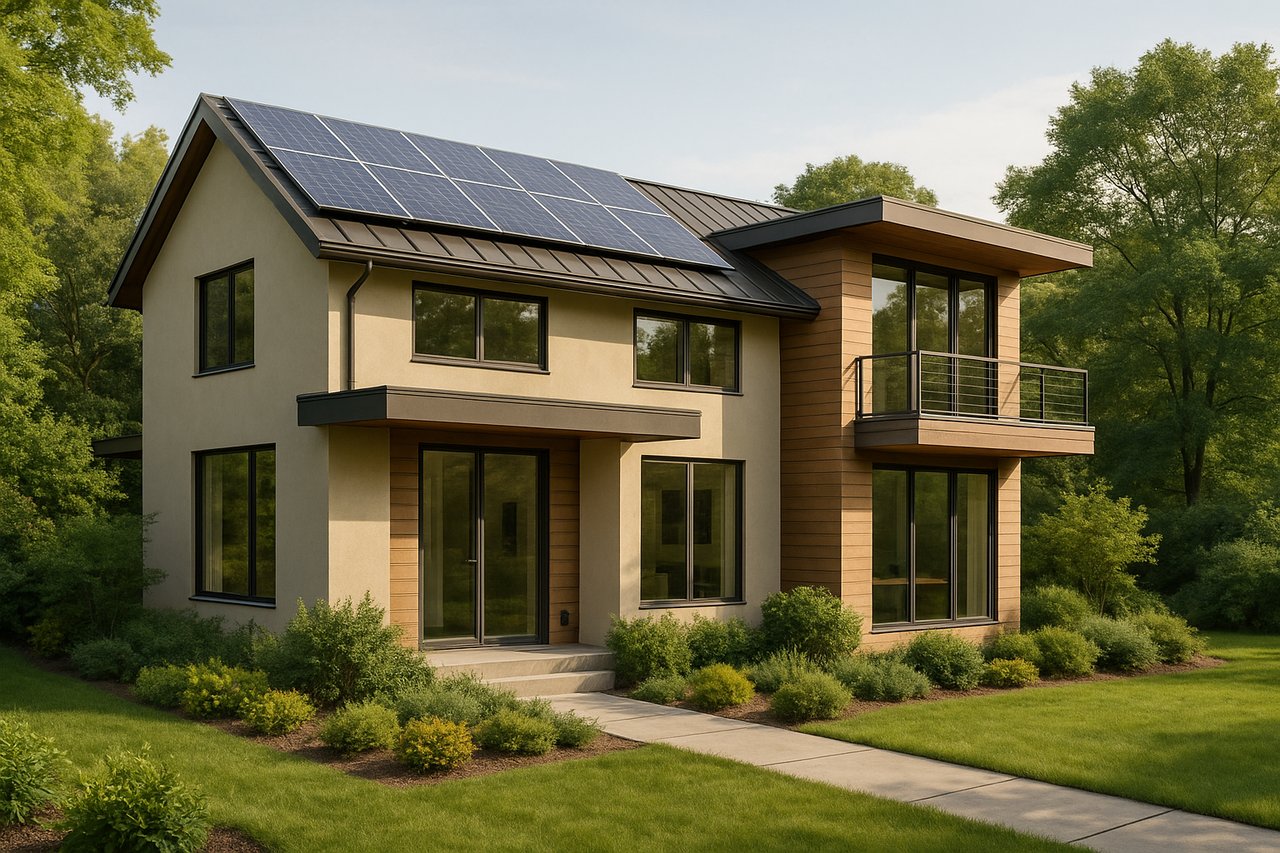
For those looking at renewable energy systems, the 25D credit offers the highest return. Solar panels must be certified by the Solar Rating and Certification Corporation (SRCC) to qualify. Geothermal heat pumps require ENERGY STAR certification, while small wind turbines, fuel cells, and battery storage systems (storing energy from renewable sources) are also eligible for the 30% credit.
Other qualifying items include energy audits conducted by certified professionals (eligible for up to $150 in credits) and biomass stoves or boilers that meet specific efficiency standards.
|
Improvement Category |
Specific Items |
Required Certification |
Credit Program |
|---|---|---|---|
|
Building Envelope |
Windows, doors, insulation, roofing |
ENERGY STAR |
25C (up to $3,200/year) |
|
HVAC Systems |
Heat pumps, furnaces, boilers, water heaters |
ENERGY STAR |
25C (up to $3,200/year) |
|
Renewable Energy |
Solar panels, geothermal, wind, batteries |
SRCC/ENERGY STAR |
25D (30% of cost) |
|
Professional Services |
Energy audits |
Qualified professional |
25C (up to $150) |
To claim these credits, documentation is essential. Contractors should provide manufacturer certificates, installation receipts, and product details showing compliance with ENERGY STAR, SRCC, or other IRS-approved standards. Keep these records for at least three years in case of an audit.
Installation Deadlines and Requirements
Once you’ve determined your eligibility and selected qualifying improvements, it’s critical to adhere to the installation deadlines.
The federal tax credit deadline is December 31, 2025. All eligible upgrades must be fully installed and operational by this date. Partial installations or incomplete systems won’t qualify. Starting January 1, 2026, these federal tax credits will no longer be available, leaving only state and utility rebates as options.
Operational requirements vary depending on the system. For solar panels, they must be connected to your electrical system and actively generating power. Geothermal systems need to have all underground loops installed and the heat pump running. Battery storage systems must be operational and storing energy from renewable sources.
As the deadline nears, contractor availability and scheduling have become crucial factors. Many homeowners are rushing to complete projects before the cutoff, leading to high demand for qualified contractors. Securing quotes and scheduling installations early can help avoid delays. For multifamily projects seeking the full 45L credit, developers must ensure workers are paid prevailing wages as determined by the Department of Labor.
Missing the deadline can be costly. For instance, a $20,000 solar installation completed before December 31, 2025, qualifies for a $6,000 federal tax credit. The same installation completed in 2026, however, would receive no federal credit.
For homeowners in the Charlotte area or elsewhere, working with local experts who understand both federal programs and state-specific incentives can ensure you meet all requirements and maximize your savings. Timely and compliant upgrades not only secure immediate tax benefits but also contribute to long-term energy efficiency.
How to Apply for Sustainable Housing Tax Credits
Getting Ready to Apply
Start by scheduling a professional energy audit. This step not only helps you pinpoint the most impactful upgrades but also qualifies for up to $150 in federal tax credits. An energy audit serves as a guide to ensure your improvements align with IRS requirements.
When choosing contractors, verify their credentials. For example, solar installers should hold NABCEP certification, and HVAC contractors must have proper licensing. Additionally, ensure the products you use meet ENERGY STAR or SRCC certification standards. You can usually find this information on the manufacturer’s website or product labels. Be sure to keep copies of all certification documents - they’re essential for IRS verification.
With the December 31, 2025, deadline approaching, contractor availability is becoming tighter. To avoid delays and potential price increases, it’s wise to secure quotes and schedule installations as early as possible. Proper planning ensures you meet both federal and state requirements while avoiding last-minute stress.
Completing Required Forms
Once your upgrades are complete, it’s time to tackle the IRS paperwork. The key form for claiming federal tax credits is IRS Form 5695, "Residential Energy Credits." This form covers both the Energy Efficient Home Improvement Credit (25C) and the Residential Clean Energy Credit (25D).
Here’s how to fill out the form:
-
Part I (25C): Enter the total cost of qualifying energy-efficient home improvements. Note that this credit has a $3,200 annual cap.
-
Part II (25D): Record 30% of the project cost for renewable energy systems, such as solar panels. Unlike the 25C credit, there’s no upper limit for this section.
Each line item requires detailed information, including the type of improvement, the amount spent, and the installation date. Keep in mind that only fully operational systems installed by December 31, 2025, qualify. Signed contracts or partial payments won’t count unless the system is fully functional.
State-level requirements vary, so be sure to check your local guidelines. For example, homeowners in North Carolina may need additional forms for state solar or energy efficiency programs. Residents of Charlotte, for instance, can consult local experts like Shawn Gerald for tailored advice on navigating state-specific requirements and rebate opportunities.
Important Deadlines and Record Keeping
Once your forms are complete, meeting deadlines and maintaining thorough records are critical. The December 31, 2025, deadline is non-negotiable - installations completed after this date won’t qualify for credits.
Keep all relevant documents for at least three years. This includes invoices, contractor certifications, and product labels. For solar systems, retain installation certificates and system specifications. Geothermal systems require equipment specs and loop installation documentation.
Since the IRS may request verification during audits, having a well-organized file is essential. For example, if you install a $2,000 ENERGY STAR window, your documentation should include the original receipt, a signed contractor invoice, the manufacturer’s certification label, and proof of installation before the deadline.
Combining federal and state incentives can amplify your savings. For example, by claiming the full $3,200 for energy-efficient upgrades and 30% of the cost of solar panels, you could save between $8,000 and $10,000. However, each program has its own documentation requirements, so be diligent.
Avoid common mistakes that can disqualify you from receiving credits. These include using non-certified products, hiring unqualified contractors, missing the installation deadline, or failing to keep proper records. For instance, installing windows that aren’t ENERGY STAR-certified or working with an uncertified contractor will void your eligibility, no matter how much you spent.
For homeowners in the Charlotte area, juggling federal requirements alongside North Carolina’s additional programs can be challenging. Working with local experts can help ensure all deadlines are met and documentation is complete. Professional guidance can be invaluable when thousands of dollars in tax savings are on the line.
Money You Can Save with Sustainable Housing Tax Credits
How Much You Can Save on Taxes
Federal tax credits for sustainable housing can lead to substantial savings, especially with the clock ticking - December 31, 2025, is the last day to claim these benefits. The Energy Efficient Home Improvement Credit (25C) allows homeowners to save up to $3,200 annually for specific upgrades. For example, you can get $2,000 for heat pumps, $600–$1,200 for windows, roofing, or insulation, $1,000 for EV chargers, and $150 for energy audits. On top of that, the Residential Clean Energy Credit (25D) covers 30% of the costs for renewable energy systems like solar panels. Together, these credits can add up to $8,000–$10,000 in federal tax savings.
But that’s not all - these federal credits can often be combined with rebates from the Department of Energy (DOE), which can go up to $8,000, along with state or utility incentives. However, it’s important to note that the federal benefits expire after December 31, 2025. Beyond the immediate financial perks, these upgrades can also make your home more appealing to potential buyers.
How Credits Affect Your Home's Value
Energy-efficient upgrades don’t just save you money - they can also make your home more attractive on the market. Adding modern systems like heat pumps, improved insulation, or renewable energy solutions such as solar panels can help you command a higher price if you decide to sell. These upgrades show buyers that the property is not only eco-friendly but also equipped for long-term savings.
For sellers, the tax benefits and increased market value create a win-win scenario. Completing these upgrades before listing your home can result in higher offers. Certification labels or professional installation certificates can further reassure buyers about the quality and reliability of the improvements.
Timing Your Real Estate Decisions
Timing is everything when it comes to maximizing both tax benefits and your property’s value. With the December 31, 2025 deadline looming, it’s wise to plan and complete upgrades sooner rather than later. Waiting could lead to delays and increased costs as the deadline approaches.
If you’re considering selling your home, aim to finish upgrades in 2025 to take full advantage of the federal credits. After this deadline, these homeowner credits will no longer be available. Buyers, on the other hand, can benefit by purchasing homes that already include these upgrades, avoiding the expense of post-deadline installations.
While the 45L tax credit for new construction will remain available through 2032, homeowners making improvements to existing homes only have until the end of 2025 to qualify. For those in Charlotte, experts like Shawn Gerald can provide tailored advice to help you align your upgrades with local incentive programs for maximum savings.
Charlotte, NC Programs and Expert Help
Charlotte Area Rebates and Programs
If you're a homeowner in Charlotte, NC, you're in luck - there are several local programs designed to make sustainable housing upgrades more affordable. Solarize Charlotte-Mecklenburg is one standout initiative, offering group-purchase discounts that can save you 10–20% on solar installations. By bundling multiple projects, this program connects homeowners with vetted contractors, ensuring both quality and cost savings.
Another excellent resource is Duke Energy's Smart $aver program, which provides rebates ranging from $150 to over $1,000. These rebates cover upgrades like high-efficiency HVAC systems, smart thermostats, and insulation improvements. To claim these benefits, homeowners need to submit proof of purchase and installation documentation, receiving either a rebate check or a credit on their energy bill.
Additionally, Mecklenburg County offers its own energy efficiency incentives, further reducing the financial burden of sustainable home improvements. When combined with state and federal programs, these local initiatives create a robust support system for homeowners looking to make eco-friendly upgrades.
North Carolina State Programs
On a broader scale, North Carolina offers state-level incentives that complement local efforts. For example, the Low-Income Housing Tax Credit (LIHTC) promotes the development of affordable, energy-efficient housing across the state. This program not only benefits developers but also provides significant advantages to residents, showcasing North Carolina's commitment to sustainable living.
By strategically combining these state programs with local rebates and federal tax credits, Charlotte homeowners can significantly cut down their out-of-pocket expenses for sustainable housing projects.
Why You Need Expert Guidance
Maximizing these incentives can be tricky, which is why working with an expert is so important. Navigating the maze of tax credits, rebates, and program requirements demands detailed knowledge of both local and federal systems. This is where Shawn Gerald, a seasoned real estate professional in Charlotte, comes in. His deep understanding of the area and its programs ensures that homeowners can fully capitalize on available benefits.
Mistakes like missing deadlines, using non-qualifying products, or submitting incomplete paperwork can cost thousands of dollars. Shawn's expertise helps clients avoid these pitfalls. His familiarity with Charlotte's neighborhoods and sustainable housing trends also ensures that your investments align with market demands, boosting your property's value in a competitive market.
"When our financing fell through Shawn said don't worry I can connect you with another lender, we were ready to give up, but thanks to Shawn Gerald he connected us with the right lender and showed us the perfect house and things went well."
Shawn's support goes beyond basic real estate advice. He helps clients understand how energy-efficient upgrades and renewable energy systems can increase property values, as buyers increasingly prioritize homes with lower utility costs and sustainable features.
Claiming multiple incentives can involve a mountain of paperwork - receipts, contractor invoices, product certifications, application forms, and more. Keeping track of all this can feel overwhelming, but with expert guidance, you can ensure every document is in order and no opportunity is missed.
|
Incentive Type |
Who Qualifies |
Max Value/Unit |
Expiration |
|---|---|---|---|
|
Federal 45L Tax Credit |
Developers, builders |
$5,000/unit |
2032 |
|
Residential Clean Energy Credit |
Homeowners |
30% of costs |
12/31/2025 |
|
Duke Energy Smart $aver |
Residential customers |
$150–$1,000+ |
Ongoing |
|
Solarize Charlotte-Mecklenburg |
Homeowners, businesses |
10–20% off solar |
Varies by round |
With federal credits like the Residential Clean Energy Credit set to expire on December 31, 2025, time is of the essence. Shawn Gerald's expertise ensures you're not only maximizing your tax benefits but also making smart choices that enhance your property's value and appeal in the Charlotte market.
Conclusion
Sustainable housing tax credits offer a dual advantage: reducing tax bills while improving energy efficiency. Programs like the Energy Efficient Home Improvement Credit, which provides up to $3,200 annually, and the Residential Clean Energy Credit, covering 30% of renewable energy project costs, are excellent opportunities for homeowners to save money and make eco-friendly upgrades. Pairing these federal programs with local incentives can lead to even greater savings.
However, these benefits come with a deadline. Homeowners need to act quickly, as these credits will expire after December 31, 2025. Waiting too long could mean missing out on federal support, leaving you to shoulder the full cost of upgrades - potentially at a time when contractor demand is on the rise.
In addition to the immediate tax savings, energy-efficient improvements can lead to lower utility bills and increase your property’s value. When combined with state and local incentives, the financial benefits multiply, all while contributing to a greener future.
Taking advantage of these programs requires careful planning. The eligibility criteria, application steps, and deadlines can be tricky to navigate, but working with experienced local professionals can ensure you don’t leave any savings on the table. Their expertise can help you meet all requirements and maximize your benefits.
Now is the time to act. Evaluate your home for eligible upgrades, get quotes from certified contractors, and complete installations well ahead of the deadline. Whether it’s solar panels, heat pumps, or energy-efficient windows, these credits represent a rare chance to align financial savings with environmental responsibility. Don’t let this opportunity slip away.
FAQs
What documents do I need to claim the Energy Efficient Home Improvement Credit and the Residential Clean Energy Credit?
To claim the Energy Efficient Home Improvement Credit or the Residential Clean Energy Credit, you'll need to gather specific documentation to prove your eligibility and expenses. Here's what to keep on hand:
-
Receipts or invoices: These should detail the costs of qualifying upgrades, like energy-efficient windows or solar panels.
-
Manufacturer certifications: These confirm that the products meet the necessary energy efficiency standards.
-
Proof of installation: If applicable, keep contractor agreements or installation receipts as evidence.
Hold onto these records for your tax filing and in case the IRS audits your claim. For the latest details and requirements, consult a tax professional or refer to IRS guidelines.
Are renters eligible for sustainable housing tax credits, or are these benefits only available to homeowners?
Most sustainable housing tax credits are aimed at homeowners who upgrade their properties with energy-efficient features like solar panels or energy-saving windows. But renters aren't entirely left out - if a landlord makes these improvements, the benefits might trickle down through lower utility bills or other perks.
If you're renting, consider talking to your landlord about potential energy-efficient upgrades. On top of that, some states or local programs provide rebates or incentives specifically for renters. It’s worth checking out what’s available in your area to see if you can take advantage of these opportunities.
How can homeowners in Charlotte, NC, save more by combining federal tax credits with local programs like Duke Energy's Smart $aver?
Combining federal tax credits with local programs like Duke Energy's Smart $aver can make energy-efficient home upgrades much more affordable for homeowners in Charlotte, NC. Federal tax credits help offset the cost of improvements such as solar panels, better insulation, or energy-efficient HVAC systems. Meanwhile, local initiatives may add even more savings through rebates or discounts.
Take Duke Energy's Smart $aver program, for instance. It offers rebates for upgrading to energy-efficient appliances or making approved home improvements. By taking advantage of both federal and local incentives, homeowners can significantly cut costs while making their homes more energy-efficient. Be sure to consult a tax professional to confirm eligibility and ensure you’re claiming all the benefits available.